


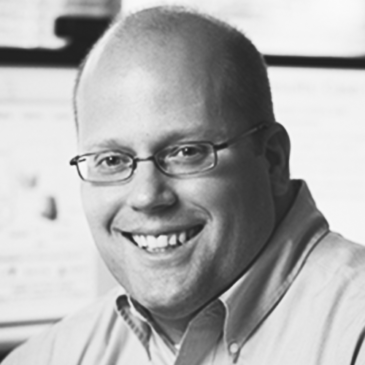
Dr. Reed received his Bachelors of Science in Geological Engineering from the University of Missouri at Rolla in 1997. He then continued his graduate studies at the University of Illinois at Urbana-Champaign where he graduated with his PhD in 2002. Dr. Reed’s first 11 years as a faculty (2002-2013) where at The Pennsylvania State University in the Department of Civil and Environmental Engineering. During his time at Penn State, Dr. Reed garnered a number of honors including the U.S. National Science Foundation’s CAREER award (2007), the ASCE/EWRI Outstanding Achievement Award (2008), and the ASCE Walter L. Huber Civil Engineering Research Prize (2012) for his leadership in advancing multiobjective systems design and decision support.
Since joining Cornell in 2013, Dr. Reed is now the endowed Joseph C. Ford Professor of Engineering in the School of Civil and Environmental Engineering. His research group is advancing multiobjective systems engineering, decision analytics for complex systems, and adaptation of water-energy infrastructure systems to better confront deeply uncertain climate change risks and growing human pressures. His research contributions in these areas have garnered more recent major honors, which include being selected as the International Environmental Modelling & Software Society Biennial Medalist and Society Fellow (2016), the American Geophysical Union (AGU)’s Paul A. Witherspoon Lecture Award for Exceptional Mid-Career Research Achievement (2019), the Association for Computing Machinery Gold Medalist for a Human Competitive ‘Humies’ breakthrough discovery (2020), and election as an AGU Fellow (2022).
Dr. Reed is now focused on advancing our ability to navigate the tradeoffs and synergies in confronting climate change, energy transitions, and sustainability development goals. Dr. Reed is seeking to transform our critical water and energy infrastructures and better map the interconnected risks that shape their deeply uncertain dynamics. He is harnessing emerging computational, data, and algorithmic breakthroughs to advance our understanding of complex adaptive human-Earth systems and our candidate pathways to a sustainable future. In support of these goals, Dr. Reed has served as a chapter author on the Complex Systems chapters of the 4th and 5th U.S. National Climate Assessments, as a facilitator in the development of the MultiSector Dynamics Community of Practice, as a member of the congressionally chartered U.S. Department of Energy’s Biological and Environmental Research Advisory Committee, and his role as an Editor in AGU’s Earth’s Future transdisciplinary Gold Open Access journal.