

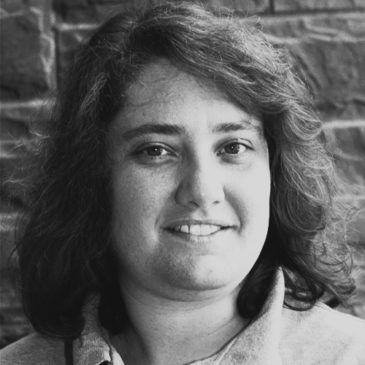
Linda Nozick is Professor and Director of Civil and Environmental Engineering at Cornell University. She is co-founder and a past director of the College Program in Systems Engineering and has been the recipient of several awards, including a CAREER award from the National Science Foundation and a Presidential Early Career Award for Scientists and Engineers from President Clinton for “the development of innovative solutions to problems associated with the transportation of hazardous waste.” Dr. Nozick has authored over 60 peer-reviewed publications, many focused on transportation, the movement of hazardous materials, and the modeling of critical infrastructure systems. She has been an associate editor for Naval Research Logistics and a member of the editorial board of Transportation Research Part A. Dr. Nozick has served on two National Academy Committees to advise the U.S. Department of Energy on renewal of their infrastructure. During the 1998-1999 academic year, she was a Visiting Associate Professor in the Operations Research Department at the Naval Postgraduate School in Monterey, California. Dr. Nozick holds a B.S. in Systems Analysis and Engineering from the George Washington University and an MSE and Ph.D. in Systems Engineering from the University of Pennsylvania.
Request More Info
Overview and Courses
Earn 50 project management education hours towards your PMP (Project Management Professional) certification and exam when you complete Cornell’s Project Management certificate program.
Most projects, even at successful companies, tend to go over budget and take longer than projected—even with formal training, specialized tools and automated software. The courses in this project management certificate program teach proven strategies and practical, hands-on tools to drive successful project outcomes. You’ll learn how to scope projects effectively, set key milestones, improve time budgeting and resource allocation, and get the project done on time and within budget. Processes covered within the project management certificate program include agile methodologies and earned value management (EVM).
The concepts, tools, and language of project management in this program can be applied to any size or type of project. Familiarity with the language of project management is helpful, but not required.
In addition to the Project Management curriculum, you have the option to join an intensive 5-week PMP study group, which includes live online sessions with other students and your instructor, guided practice PMP exams, and preparation strategies designed to help you prepare for the PMP exam. You’ll be required to purchase the accompanying study books for this optional study group.
You now have one year of access to Symposium! These dynamic, highly interactive virtual Zoom sessions are designed to foster collaboration and networking with fellow professionals. Led by expert facilitators and occasionally featuring special guests, each multi-day event dives into the most pressing topics in Project Management. You can participate in as many sessions as you like throughout the year. While attendance is encouraged, it's not required.
The courses in this certificate program are required to be completed in the order that they appear.
Course list
Successful projects begin with a solid plan. In this course, you'll learn the foundational principles, frameworks, and terminology that effective project managers use to initiate, plan, and manage projects across industries.
Professor Linda Nozick, Director of Civil and Environmental Engineering at Cornell, introduces practical tools for defining project scope, breaking complex work into manageable tasks, developing project schedules, and establishing realistic timelines and resource plans. Through hands-on exercises, you'll build the skills needed to organize, track, and manage projects with greater confidence.
Whether you're new to project management or preparing for future PMP® certification, this course provides a strong foundation in the concepts and practices that support successful project delivery.
Note: This course uses Microsoft Excel (with the free Solver add-in) for selected exercises. No specialized project management software is required.
- Oct 28, 2026
- Nov 11, 2026
- Nov 25, 2026
- Dec 9, 2026
- Dec 23, 2026
- Jan 6, 2027
- Jan 20, 2027
Research shows that a high percentage of projects take significantly longer than expected and cost more than anticipated. Moreover, if you ask people for an estimate of how long a task will take them to complete, their estimate will usually be overly optimistic.
Sometimes, if you bring in extra people to help with a task, that actually slows down progress instead of accelerating it. Why is this so? And what can you do about it? In this course, from Linda K. Nozick, Director and Professor of Civil and Environmental Engineering at Cornell, you will examine these questions. Students will identify strategies to integrate resource availability constraints into project planning, scheduling, and control.
This course is designed for project managers who seek better practical results for aligning available resources with tasks and bringing activities to completion on time. Students will examine compression strategies for bringing a project that's running late back on track and will explore how to handle common types of project creep, such as handling customer requests that require extra time, and working with team members who decide independently to invest extra effort in a task.
This course combines a focus on formal project management mechanisms with an emphasis on the human element: what can project managers do to resolve issues brought about in the normal course of working with customers, team members, and stakeholders?
You are required to have completed the following course or have equivalent experience before taking this course:
- Organizing the Project and Its Components
- Oct 28, 2026
- Nov 11, 2026
- Nov 25, 2026
- Dec 9, 2026
- Dec 23, 2026
- Jan 6, 2027
- Jan 20, 2027
Risk management is a key function in project management. Project managers should be able to apply a variety of risk-management tools in their work, including performing risk identification, quantification, response, monitoring, and control.
In this course from Professor and Director of Civil and Environmental Engineering Linda K. Nozick, you will examine the nature and types of project risk and learn to apply specific mitigation strategies.
You'll have an opportunity to analyze a past project you've worked on and assess what the risks might have been and why. Then you'll analyze the outcomes: Did the known risks come to fruition? What were the leading indicators? What could they have done for contingency planning at the beginning? By asking these questions, you'll then be able to perform several calculations to compute the probability that a project will finish on time.
You are required to have completed the following courses or have equivalent experience before taking this course:
- Organizing the Project and Its Components
- Planning and Managing Resources
- Oct 28, 2026
- Nov 11, 2026
- Nov 25, 2026
- Dec 9, 2026
- Dec 23, 2026
- Jan 6, 2027
- Jan 20, 2027
Successful project managers don't wait until a project is complete to evaluate performance—they monitor progress throughout the project lifecycle to identify issues early and make informed decisions. Earned Value Management (EVM) is a proven framework for measuring project performance, forecasting outcomes, and keeping projects on track.
In this course, Professor Linda Nozick, Director of Civil and Environmental Engineering at Cornell, introduces the principles and practical application of EVM. You'll learn how to measure project performance against scope, schedule, and budget, interpret key performance metrics, forecast project outcomes, and determine when corrective action is needed to improve project success.
Through practical examples and exercises, you'll build the confidence to use EVM as a decision-making tool that supports stronger project controls and more effective communication with project stakeholders.
Students will be most successful if they have a foundational understanding of project planning concepts, including project schedules, budgets, work breakdown structures, and project networks.
You are required to have completed the following courses or have equivalent experience before taking this course:
- Organizing the Project and Its Components
- Planning and Managing Resources
- Assessing, Managing, and Mitigating Project Risk
- Oct 28, 2026
- Nov 11, 2026
- Nov 25, 2026
- Dec 9, 2026
- Dec 23, 2026
- Jan 6, 2027
- Jan 20, 2027
In traditional project management, we tend to make assumptions: the customer knows precisely what they want, or the team's workflow and tasks will go according to plan and in sequence.
Practically speaking, this is rarely the case. Sometimes the customer doesn't know what they need until they see an early iteration of your team's work and can provide feedback. Because of this, work is usually done incrementally. We must build flexibility, even agility, into the model in order to succeed.
This course is designed for project managers who want to get better practical results with adaptive approaches to projects. Students in this course will be most successful if they have a foundational understanding of traditional project management tools and processes including project networks, budgets and schedules.
You are required to have completed the following courses or have equivalent experience before taking this course:
- Organizing the Project and Its Components
- Planning and Managing Resources
- Assessing, Managing, and Mitigating Project Risk
- Using Earned Value Management for Project Managers
- Oct 28, 2026
- Nov 11, 2026
- Nov 25, 2026
- Dec 9, 2026
- Dec 23, 2026
- Jan 6, 2027
- Jan 20, 2027
Earning the Project Management Professional (PMP®) certification demonstrates a high standard of project management knowledge and professional expertise. This facilitator-led study group is designed to help you reinforce the concepts covered throughout the Project Management Certificate and prepare confidently for the PMP certification exam.
Through live online sessions, you'll review key PMBOK® Guide concepts, work through guided practice exams, and engage in collaborative discussions with fellow professionals preparing for certification. Your facilitator will provide personalized guidance, clarify challenging topics, and share proven exam preparation strategies to help you strengthen your readiness for exam day.
By combining structured review, practice exams, and expert instruction, this study group helps you deepen your understanding of project management principles and approach the PMP certification exam with confidence.
Required study materials
- A Guide to the Project Management Body of Knowledge (PMBOK), 8th Edition. Project Management Institute.
- Agile Practice Guide, 1st Edition. Project Management Institute.
- Rita Mulcahy's PMP Exam Prep, 11th Edition. Rita Mulcahy, PMP.
- Nov 11, 2026
- Dec 9, 2026
- Jan 6, 2027
- Feb 3, 2027
- Mar 3, 2027
- Mar 31, 2027
- Apr 28, 2027
Symposium sessions feature two days of live, highly interactive virtual Zoom sessions that will explore today's most pressing topics. The Project Management Symposium offers you a unique opportunity to engage in real-time conversations with peers and experts from the Cornell community and beyond. Using the context of your own experiences, you will take part in reflections and small-group discussions to build on the skills and knowledge you have gained from your courses.
Join us for the next Symposium, in which we'll share experiences from across industries, inspiring dialogue around best practices, innovation, and the future of project management. You will support your coursework through discussion and application of your knowledge, exploring pressing challenges and trends. By participating in relevant and engaging conversations with eCornell classmates, you will discover a variety of perspectives and build connections.
All sessions are held on Zoom.
Future dates are subject to change. You may participate in as many sessions as you wish. Attending Symposium sessions is not required to successfully complete any certificate program. Once enrolled in your courses, you will receive information about upcoming events. Accessibility accommodations will be available upon request.
Request more Info by completing the form below.
How It Works
Faculty Author
Key Course Takeaways
- Examine the project management life cycle and key project characteristics
- Develop a work breakdown structure
- Construct a project network to identify task durations
- Construct a Gantt chart
- Use float information for decision making
- Identify the critical path
- Recognize shortcomings in computation
- Identify sources of uncertainty in task durations
- Examine PERT computations
- Study the PMBOK and complete practice exams to prepare for the PMP exam

Download a Brochure
Not ready to enroll but want to learn more? Download the certificate brochure to review program details.
What You'll Earn
- Project Management Certificate from Cornell University's College of Engineering
- 50 Professional Development Hours (5 CEUs)
- 50 Professional Development Units (PDUs) toward PMI recertification
- 50 Professional Development Credits (PDCs) toward SHRM-CP and SHRM-SCP recertification
- 50 Credit hours towards HRCI recertification
Watch the Video
Who Should Enroll
- Team leaders
- Managers
- Anyone responsible for the success of team projects and initiatives
- Professionals with exposure to project management efforts or tools but no formal training
- Project management professionals preparing to take the PMP exam
Frequently Asked Questions

“The journey with eCornell’s Project Management program has been enriching and transformative, equipping me with valuable skills and insights and paving the way for my future career progression. The insights and skills gained from the course have made me more confident and capable of taking on higher responsibilities in project management. This transformation was not limited to the professional sphere alone but also had implications for my personal growth, as it equipped me to manage tasks and responsibilities more effectively.”
Request Information Now by completing the form below.

Project Management
| Select Payment Method | Cost |
|---|---|
| $3,900 | |